An editorial read from the Channel archive, kept in the relaunch for its coverage of 3d printing.
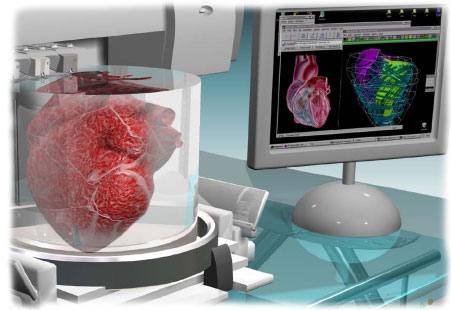
So we all know that it takes incredible engineering and medical prowess to bioprint an organ or any human part - but why is it hard, even for the folks who do it? There are four levels of complexity in bioprinting . The director of the Wake Forest Institute for Regenerative Medicine in North Carolina identified these complexity categories as flat structures, tubular structures, hollow organs, and the "ultimate goal" of organs like the heart, liver, and kidneys (each of these categories increasing in difficulty). Flat structures are generally composed of one type of cell, for example human skin, making it relatively simple for a 3D printer to replicate. Tubular structures have two major types of cells and are more difficult for scientists and 3D printers to mirror - an example would be blood vessels. Hollow organs like the stomach or bladder have more connections and complex relationships between cells, even harder to artificially create than the two-cell groups. And clearly, bioprinted hearts, livers, and kidneys will have the most impact in our world, but come with a high price in terms of time, creativity, and hard work.